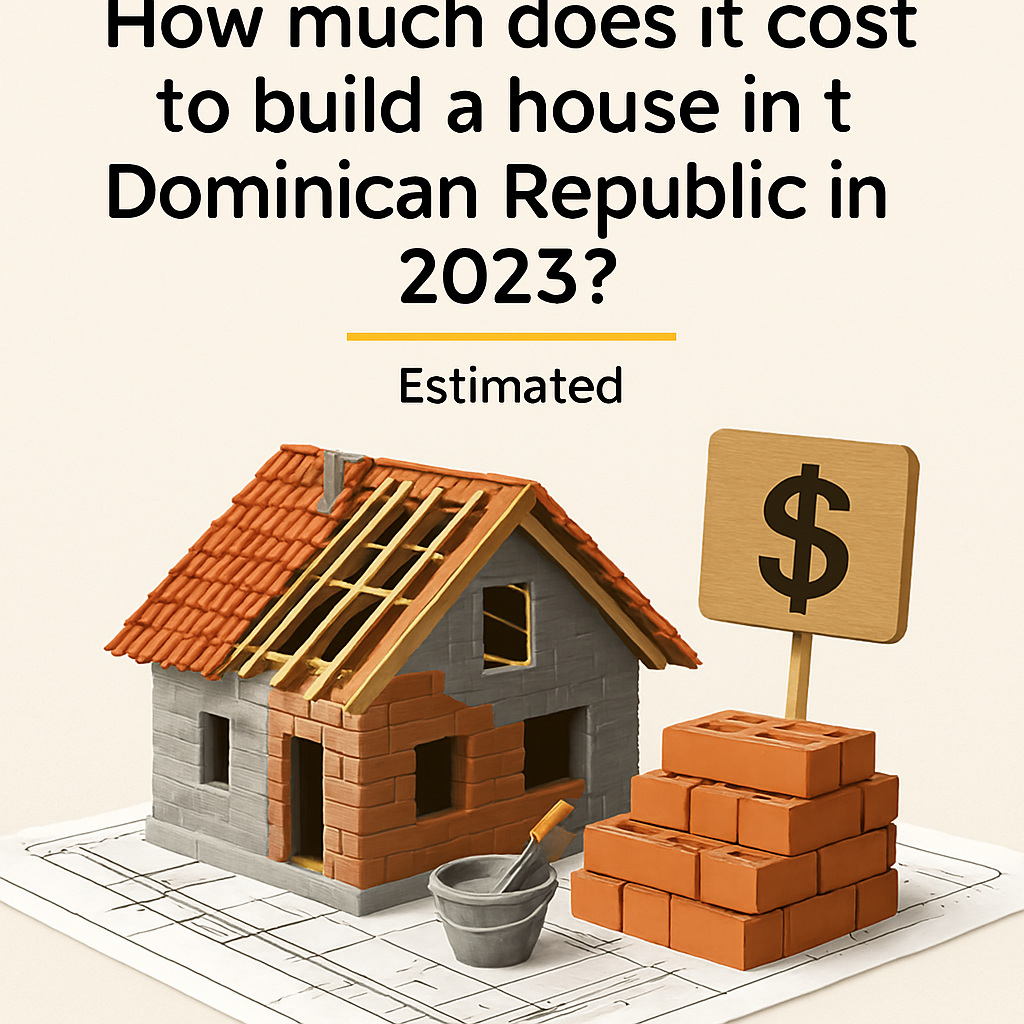
When discussing or planning to build a house in the Dominican Republic, the first factor to consider is the location of the construction. Many housing projects sell lots with pre-established dimensions, so the primary consideration is the space—how many people will live in the household (family or couple) and what type of construction is needed to ensure comfort after the significant investment required, especially since 2020 when construction costs skyrocketed.
Lots are often sold by square meter, and some may include improvements or pre-established dimensions. Another option is buying a finished apartment, where you can customize the design to your preferences. It is also essential to evaluate whether the lot is flat, sloped, or on an incline.
Once the lot is acquired, the owner typically consults either an engineer or an experienced construction foreman. Engineers may charge higher fees due to their formal training and efficiency, while others may opt for a foreman due to cost flexibility. Some projects may involve both.
After deciding, the owner works with an architect to draft a plan based on their vision. Once the blueprint is finalized, construction begins by clearing the lot and laying the foundation (zapata), which involves rebar, binding wire, cement, and labor. The cost depends on the house’s size.
Next, concrete blocks are laid, often reinforced with vertical rebar until reaching roof level. Columns (round or square) are then raised based on structural needs.
Some owners build a septic tank before pouring the concrete slab (plato), requiring materials like blocks, rebar, cement, zinc, binding wire, and drainage pipes.
For the slab, wooden forms are set up, followed by rebar and electrical conduit placement. The concrete can be poured using ready-mix trucks or mixed on-site manually.
After the slab, owners may proceed with plastering (empañete), plumbing (bathroom/kitchen), and constructing a water cistern if needed. Electrical installation is usually addressed last.
Each construction project is unique, so general estimates may not apply. Unforeseen issues often arise, potentially adding 15–20% to the initial budget.

Material prices vary by store and location. Current estimated prices (as of Nov 29, 2023) include:
-
Binding wire: RD$55/lb
-
6-inch block: RD$45/unit
-
1/4″ rebar (5.5mm): RD$1,300–1,500/dozen
-
Cement: RD$450–550/bag
-
1/2″ PVC electrical conduit: RD$8–15
-
Pressure/semi-pressure pipes: RD$180–335
-
Electrical wire (varies by gauge #8–#14): ~RD$2,400/roll
Additional material prices:
-
8-inch block: RD$52
-
Cibao Gray Cement: RD$475
-
Titan Cement: RD$510
-
3/8″ rebar: RD$236/unit (RD$3,068/quintal)
-
1/2″ rebar: RD$421/unit (RD$2,947/quintal)
-
3/4″ rebar: RD$972/unit (RD$2,916/quintal)
-
1″ rebar: RD$1,797/unit (RD$3,594/quintal)
-
Sand: RD$27,000/truck (18m³) or RD$1,800–2,000/small truck (2.5m³)
Prices may vary slightly by region. More detailed information may be needed for accurate budgeting.
Acerca del autor